Architecture-Led OEM/ODM Furniture Engineering, Contract Manufacturing Solutions, and High-Performance Space Specifications for Global Commercial Procurement.
Featured Contract Collections
Precision Commercial Furniture Solutions
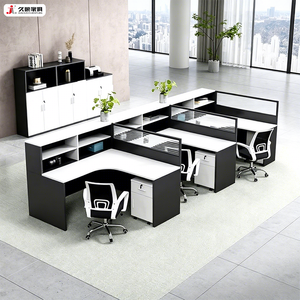
Engineered for high-traffic environments including executive offices, corporate facilities, hospitality projects, luxury hotels, and commercial dining venues.
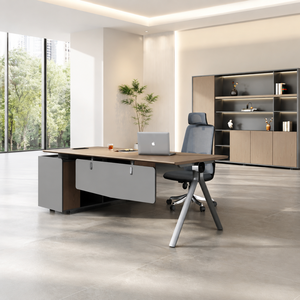
Modern L Shaped Executive Office Desk with Storage Cabinet Power Module CEO Manager Table Commercial Office Furniture XIMI-04
From structural engineering to rapid custom prototyping, our integrated OEM platform minimizes procurement friction for commercial architects and contractors.
Custom Design & CAD Engineering
We convert architectural drawings, render concepts, and space plans into production-ready 3D BIM models, CAD shop drawings, and precision bill-of-materials (BOM).
Vertically integrated manufacturing facilities handling high-volume institutional rollouts as cleanly as customized, short-run bespoke hospitality projects.
Architectural Executive Report: The Strategic Paradigm of Custom OEM Commercial Furniture Manufacturing
In modern commercial space planning—encompassing executive corporate headquarters, luxury resorts, boutique cafes, and public infrastructure—furniture is no longer viewed merely as functional mobile millwork. It operates as an architectural extension of brand identity, directly influencing spatial efficiency, occupant wellness, and long-term asset value. As a primary Custom OEM Commercial Furniture Manufacturer, our organization bridges the historical divide between bespoke design intent and industrial-scale manufacturing precision.
Commercial procurement directors and specifiers face unprecedented supply chain dynamics. Off-the-shelf catalog solutions frequently fail to meet non-standard spatial footprints, local fire compliance regulations (such as CAL 133 or BS 5852), or specialized ergonomic requirements. Conversely, pure custom joinery workshops often lack the testing infrastructure, batch consistency, and production scale required for multi-thousand-unit enterprise rollouts. Custom OEM contract manufacturing provides the vital structural middle ground: offering tailormade engineering backed by standardized quality assurance protocols.
Core Procurement Insight: Information gain in commercial furniture sourcing stems from evaluating lifecycle cost rather than initial unit acquisition price. Contract-grade OEM furniture engineered to ANSI/BIFMA X5.5 (Desk Products) and ANSI/BIFMA X5.4 (Lounge & Public Seating) demonstrates a 300% longer operational life span in high-traffic installations compared to retail-grade alternatives.
Technical Anatomy of OEM Contract Furniture Production
The transition from a designer’s schematic conceptual sketch to a commercial-grade finished product demands rigorous materials science and mechanical engineering. Commercial spaces expose furniture to friction, static load stress, thermal fluctuations, cleaning chemical exposure, and intense mechanical fatigue. OEM manufacturing addresses these friction points through systematically engineered material pairings:
Structural Substrates & Metallurgies: Utilizing cold-rolled high-gauge steel tubing, 6063-T5 structural aluminum alloys, and legally harvested, kiln-dried Grade-A teakwood. Frames feature full perimeter robotic TIG/MIG welding to eliminate structural micro-fractures under continuous dynamic loads.
Surface Resistance Engineering: Utilizing multi-stage electrostatic powder coating systems with zinc-rich primers, achieving 1,500+ hours of salt spray resistance (ASTM B117 standard). Table surfaces incorporate high-pressure compact laminates (HPL) or UV-cured water-based polyurethane finishes that resist scratching, thermal shock, and isopropyl sanitation agents.
Ergonomic Cushioning & Textile Technology: Utilizing high-resilience (HR) cold-cure molded polyurethane foams with density ratings exceeding 45kg/m³, combined with solution-dyed acrylic textiles and antimicrobial vinyls rated at 100,000+ Martindale rub cycles.
Engineering Benchmark: Commercial OEM Manufacturing vs. Retail Standard
Below is a comparative breakdown illustrating the operational and engineering metrics that differentiate specialized OEM contract manufacturing from standard commercial retail distribution.
Performance Vector
OEM Commercial Contract Manufacturing
Standard Retail Commercial Solutions
Architectural Impact
Structural Load Certification
BIFMA X5.1 / EN 1728 (Up to 300kg dynamic load)
Uncertified or light-duty residential rating
Eliminates structural failures and corporate liability risks.
Dimensional Customization
Full CAD/BIM modification (Millimeter precision)
Fixed modular grid dimensions only
Maximizes floor space efficiency and custom layout alignment.
Protects general contractor milestone delivery schedules.
Supply Chain Traceability
FSC-Certified timber, ISO 9001 factory documentation
Opaque multi-tiered broker sourcing
Fulfills enterprise ESG metrics and LEED accreditation requirements.
Future Procurement Trends in Commercial Contract Furniture (2026–2030)
As commercial spaces adapt to hybrid working paradigms, experiential hospitality models, and stringent environmental disclosures, the OEM manufacturing sector is undergoing rapid evolution. Sourcing managers and interior specifiers must anticipate three core macro-trends over the coming decade:
Future-proof commercial furniture must be designed for disassembly (DfD). Leading contract manufacturers are abandoning permanent adhesive bonding in favor of exposed, serviceable mechanical fasteners and standardized modular sub-assemblies. This approach allows venue operators to replace worn upholstery, damaged armrests, or scuffed desk edges in-situ without discarding structural steel or aluminum chassis. This modular philosophy drastically reduces long-term CapEx spending and aligns directly with enterprise decarbonization targets.
2. Acoustic Micro-Environments & Spatial Agility
With open-plan corporate landscapes and multi-functional hotel lobbies dominating modern architectural layouts, noise attenuation has emerged as a primary spatial challenge. OEM manufacturers are incorporating sound-absorbing acoustic PET felts, micro-perforated wood veneers, and dense baffle cores directly into executive desks, lounge partitions, and waiting room suites. Furniture now functions as a primary acoustic management element, dampening ambient decibel levels while providing visual privacy for high-focus tasks.
3. Material Transparency & Digital Product Passports
Global regulatory shifts (such as the EU Corporate Sustainability Due Diligence Directive) are making material traceability mandatory. OEM commercial manufacturers are introducing Digital Product Passports (DPP)—scannable QR codes embedded beneath furniture frames that provide immediate access to timber origin certificates, recycled metal percentages, VOC emission test reports (Greenguard Gold standard), and end-of-life recycling protocols.
Sector-by-Sector OEM Customization Guide
Our OEM manufacturing capabilities cater to distinct commercial verticals, tailoring material choices and joinery techniques to the specific operational stresses of each environment:
Executive Corporate & Office Environments
Modern executive suites require an atmosphere of understated authority coupled with advanced technological integration. Products like our L-Shaped Executive Office Desk Series incorporate hidden wire raceways, soft-close hydraulic storage units, integrated leather writing pads, and embedded power/data hubs. Height-adjustable internal steel columns can be integrated discreetly into solid wood or veneer surrounds to preserve high-end aesthetics while prioritizing user ergonomics.
Hospitality, Resorts & Luxury Restaurants
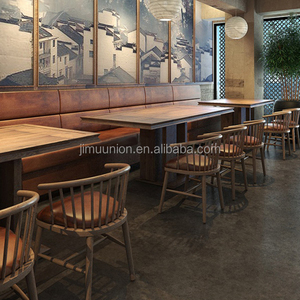
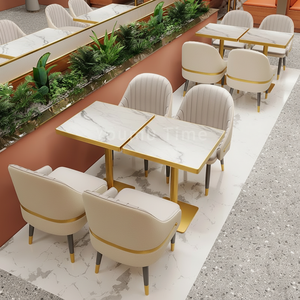
High-turnover dining venues and luxury hotels require furniture that balances aesthetic warmth with extreme surface resilience. Restaurant dining sets and booth sofas utilize solid hardwood or PVD-gold electroplated stainless steel bases resistant to aggressive mop impacts and commercial floor detergents. Upholstery fabrics utilize fluid-barrier backings that prevent liquid spills from penetrating internal foam cores, mitigating odor and bacteria buildup.
Public Waiting Areas & Institutional Lobbies
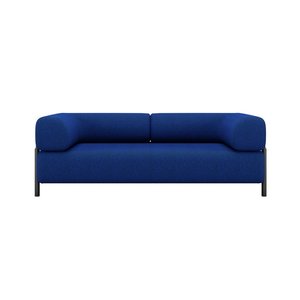
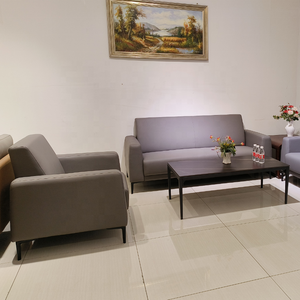
Airport lounges, corporate lobbies, and healthcare facilities experience continuous 24/7 dynamic usage. Waiting area sofa systems feature anti-microbial synthetic leathers, reinforced tamper-proof hardware, and weighted bases to prevent unapproved spatial repositioning. Modular configurations allow space planners to scale seating density dynamically according to foot-traffic patterns.
Procurement Knowledge Base
Frequently Asked Questions
Detailed technical answers for architects, project managers, and commercial furniture buyers.
What is the minimum order quantity (MOQ) for custom OEM commercial furniture projects?
Our OEM manufacturing workflow is structured flexibly to support both large-scale commercial developments and boutique contract projects. While standard catalogue modifications carry low MOQs (typically 10-20 units), fully customized ground-up bespoke designs depend on tooling requirements and material sourcing constraints. We recommend consulting with our engineering team to review project-specific shop drawings and optimized batch sizing.
Do you provide complete technical shop drawings and BIM models prior to production?
Yes. Every OEM commercial contract includes comprehensive technical documentation. Our internal design engineering department generates 2D CAD dimensioned shop drawings, exploded structural diagrams, material finish schedules, and production-ready 3D BIM (Revit/OBJ) files. Formal production begins only after signed client approval of all technical documentation and physical material swatch samples.
How does your factory ensure compliance with international commercial durability standards?
All structural models undergo rigorous in-house mechanical testing prior to mass production. We test for static weight load, drop impact resistance, seating tilt fatigue, and armrest durability in accordance with ANSI/BIFMA, EN 581, and ISO quality management guidelines. Third-party testing certifications (such as SGS or TÜV) can be performed upon project specification.
What materials are recommended for outdoor hospitality installations in harsh coastal climates?
For coastal hospitality and high-UV environments, we specify legally sourced kiln-dried Grade-A teakwood (rich in natural protective oils), 6063-T5 marine-grade aluminum coated with AkzoNobel architectural powder finishes, and solution-dyed acrylic textiles (such as Sunbrella). Internal cushioning utilizes reticulated open-cell quick-dry polyurethane foam that permits water flow-through, eliminating mildew risk.
What is the standard warranty coverage on your OEM contract furniture solutions?
We back our commercial products with comprehensive multi-year contract warranties covering structural frame integrity, weld failure, and hardware mechanisms (typically 5 to 10 years depending on structural classification). Upholstery and surface coatings are covered under standard commercial wear-and-tear warranties. Full terms are detailed in our commercial trade agreement.
Partner with a World-Class Commercial OEM Manufacturer
Initiate your custom project specification today. Speak directly with our senior furniture engineers and contract procurement specialist team to request instant factory direct estimates, material swatches, or technical shop drawings.