0%

A well-chosen outdoor daybed can turn a sunny patio into a place for reading, resting, or sharing a quiet afternoon. In 2026, Designer Outdoor Daybeds span sculptural statement pieces, low-profile loungers, and generous designs made for two. Looks matter, but comfort and construction matter just as much. A striking frame is little comfort if cushions slide around or collect water after a shower.

This guide compares the details that shape everyday use: frame materials, cushion support, weather-resistant fabrics, dimensions, and care requirements. We’ll also consider shade options, adjustable backs, and whether a design suits a compact balcony or a wide poolside terrace. Manufacturer specifications and warranty terms can help clarify what a product is built to handle, though they cannot promise years of flawless performance. No fabric stays perfect forever. Even an elegant daybed may feel oversized beside a narrow walkway, or too firm for a long afternoon nap. That trade-off is worth noticing. The goal is not to declare one style right for everyone, but to identify thoughtful options for different spaces, budgets, and habits. Look for the small signals: removable covers, sturdy joints, and cushions that feel supportive rather than simply plush. These practical checks make a shortlist more useful than appearance alone.
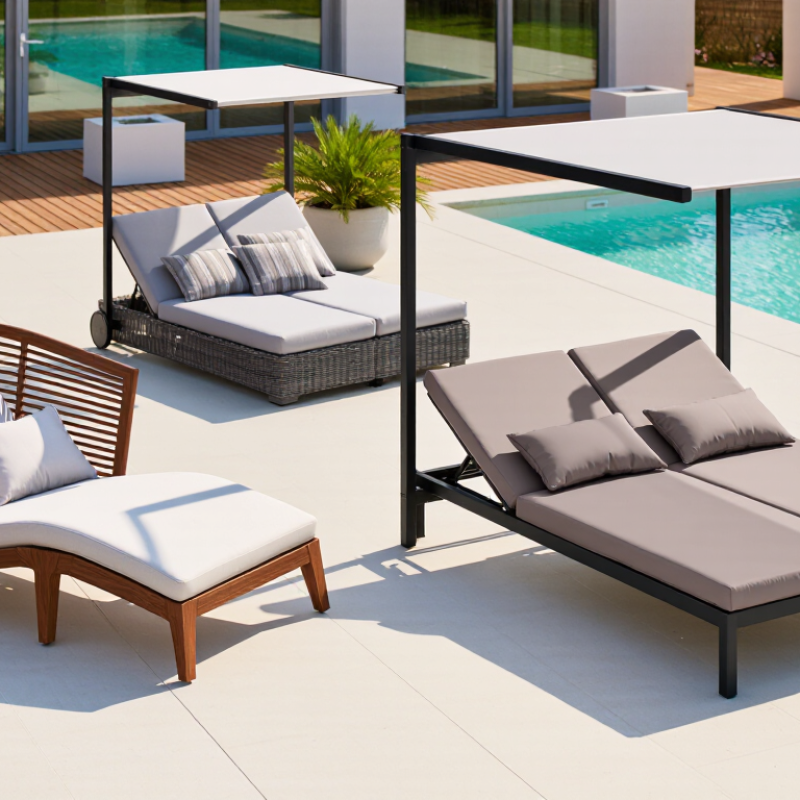
What Are the Top Designer Outdoor Daybeds for 2026?

What Defines a Designer Outdoor Daybed in 2026?

A designer outdoor daybed in 2026 is more than an indoor sofa placed under open sky. It balances lounging comfort with weather-aware construction. Look for a stable frame, smooth drainage, and cushions that dry quickly after a shower. Removable, replaceable covers make wear easier to manage. Small details matter: rounded edges, generous seat depth, and a backrest that supports reading as well as reclining.

Scale is part of the design. A broad daybed can dominate a narrow terrace, while a low profile keeps sightlines open beside a pool or garden. Check how the piece feels in use, not only how it photographs. The arm may look sculptural but leave nowhere to rest a drink. That matters. Materials should suit local sun, rain, and salt exposure; “outdoor-ready” alone says little about long-term care.

Market growth helps explain the attention to outdoor furnishings, but it does not prove any single design is durable. Allied Market Research’s 2022 outdoor furniture report valued the global market at $50.4 billion and projected $83.7 billion by 2032, a 5.3% compound annual growth rate. The report covers outdoor furniture broadly, not daybeds specifically. Treat that figure as context, then inspect construction, fabric care guidance, and replacement-part availability. A perfect-looking cushion that stays damp is still a design flaw.

Which Materials and Features Shape Outdoor Daybed Design?

Outdoor daybed design in 2026 is less about a sculptural silhouette alone and more about how materials handle sun, rain, and daily use. Grand View Research valued the global outdoor furniture market at about $50.8 billion in 2023, projecting 5% annual growth through 2030. That market estimate signals continued investment, but it does not guarantee better-performing products. For frames, powder-coated aluminum offers low weight and rust resistance; responsibly sourced teak brings warmth but needs periodic care to retain its color. Check joints, feet, and finishes closely. They take the knocks.

Cushions deserve equal scrutiny. Textile Exchange’s Materials Market Report 2024 estimates polyester made up 57% of global fiber production in 2023. That figure reflects material scale, not outdoor durability: UV resistance, weave, and colorfastness still depend on fabric construction and treatment. Look for removable covers, quick-draining cushion cores, and fabrics tested for fading. Small details matter. A slight seat incline can help shed water, while adjustable backs support reading or lounging. Still, comfort has a weak point: thick cushions feel inviting but may dry slowly after a storm. Check care instructions and replacement-part availability before choosing a daybed.

What Types of Designer Outdoor Daybeds Are Available?

Designer outdoor daybeds come in several distinct forms, each suited to a different space and routine. Canopy daybeds create a shaded retreat, with curtains or a fixed roof filtering strong afternoon sun. Check the canopy’s fabric rating and frame stability before placing it in an exposed garden. Shade matters.

Low platform daybeds have clean lines and generous cushions, making them easy to pair with a patio or poolside layout. Modular designs separate into smaller seats when guests arrive, though their many cushions need a dry storage plan. Round or cocoon-style daybeds feel intimate and can soften a boxy terrace. Their curved frames may, however, take up more usable floor space than expected.

For flexible lounging, look for adjustable-back models that shift from upright reading to a flatter resting position. Suspended daybeds add gentle movement, but require a suitable support structure and careful installation. Double-width designs suit shared lounging; measure doorways and pathways before delivery. Small details count: removable covers, breathable upholstery, and a slatted base help with cleaning and airflow. Test the seat depth if possible. A beautiful silhouette is not always comfortable for every body, and outdoor fabrics still benefit from routine care.

What Types of Designer Outdoor Daybeds Are Available?

Outdoor daybeds commonly include single loungers, double daybeds, canopy styles, modular designs, and hanging models. Bars show approximate designed-for capacity, not a fixed limit; actual capacity depends on the product’s dimensions and specifications.

What Are the Top Designer Outdoor Daybeds for 2026?

For 2026, the top designer outdoor daybeds balance relaxed proportions with materials that can handle sun, damp air, and everyday use. Look for a sturdy aluminum or responsibly sourced hardwood frame, quick-drying cushions, and removable covers. Pale, textured fabrics feel calm beside greenery, while deeper colors are less likely to show small marks. Details matter.

A modular daybed suits changing needs: separate sections can create a corner seat or a longer lounging surface. For a compact patio, a slim frame with a raised base keeps the space feeling open and makes sweeping easier. Check the cushion depth in person if possible; an elegant silhouette can still feel too firm for a long afternoon. Comfort is personal.

Before choosing, measure the full footprint, including room to walk around it and space for a side table. Ask how the fabric should be cleaned and whether cushions need indoor storage during prolonged wet weather. One trade-off is unavoidable: plush cushions often need more care. A movable shade nearby can make the daybed usable through hotter hours.

What Are the Top Designer Outdoor Daybeds for 2026?

A practical comparison of popular outdoor daybed designs, ranked by versatility, comfort, and suitability for different outdoor spaces.

Rank Daybed Design Typical Frame and Upholstery Best For Key Advantages Points to Check Care Considerations
1 Modular lounge daybed Often a powder-coated metal or timber frame with separate outdoor cushions Flexible patios and shared outdoor living areas Sections can often be rearranged; works for lounging or additional seating Confirm that the modules lock together securely and that replacement cushion covers are available Store cushions in a dry, ventilated place during prolonged wet weather
2 Canopy daybed Commonly a metal frame with a fabric canopy and removable cushions Sunny gardens, poolside areas, and open terraces Provides a defined lounging area and adjustable shade on models with a movable canopy Check canopy adjustment, anchoring requirements, and wind guidance from the manufacturer Clean the canopy according to its care label; retract or secure it in strong winds
3 Woven cocoon daybed Typically a metal support frame with synthetic outdoor weaving and loose cushions Covered balconies and sheltered garden corners Creates a private, enveloping seat and adds visual texture to an outdoor setting Check overall width, access through doorways, and whether the cushions are removable Brush away debris from the weave and allow cushions to dry fully before storage
4 Timber platform daybed Often made with outdoor-suitable hardwood slats and a separate mattress-style cushion Decks, pergolas, and naturalistic garden designs Simple, architectural form; can coordinate easily with other timber outdoor furniture Review the care requirements for the specific timber and check that the slats support the cushion evenly Periodic cleaning and finish maintenance may be needed, depending on the timber and exposure
5 Aluminium sling daybed Usually a lightweight aluminium frame with tensioned outdoor fabric, sometimes with a cushion Pool decks and spaces where furniture is moved often Lightweight construction and a more streamlined profile than heavily cushioned designs Check fabric tension, reclining positions, and the stated load limit for the exact model Rinse off surface dirt and follow the fabric maker’s cleaning instructions

Selection note: These are design categories, not named product models. Materials, dimensions, weather resistance, care instructions, and weight limits vary by model; verify the manufacturer’s specifications before purchasing.

How Can You Choose and Care for an Outdoor Daybed?

What Are the Top Designer Outdoor Daybeds for 2026?

Choosing an outdoor daybed starts with the space and its exposure. Measure the footprint, including room to walk around it, before shopping. A deep frame may look inviting but crowd a narrow deck. Check that the frame suits your climate, and look for quick-drying cushions and removable covers. Comfort is personal. Test the seat depth if possible; a stylish daybed can still feel awkward after ten minutes.

Tips: Place it where water drains away. Use a breathable cover, not a tight plastic wrap. Check cushion dimensions before ordering.

Care depends on the materials. Brush off leaves and grit regularly, since trapped debris can stain fabric or scratch a frame. Follow the maker’s cleaning instructions, and test a mild cleaner on a hidden spot first. Let cushions dry fully before storing them to reduce musty odors. After windy weather, check the feet, joints, and fasteners. I’ve found that even sturdy furniture needs small adjustments over time; one loose fitting can make a daybed wobble. In colder or wetter seasons, store cushions indoors and protect the frame as recommended. Don’t assume every outdoor fabric can handle harsh scrubbing or prolonged sun. A little routine care helps preserve comfort and appearance.

FAQS

What defines a designer outdoor daybed in 2026?

It combines lounging comfort with weather-aware construction. Look for a stable frame, draining design, quick-drying cushions, and removable covers. Looks are not enough.

What types of outdoor daybeds are available?

Options include canopy, low-platform, modular, round, adjustable-back, suspended, and double-width designs. Each fits a different space and routine.

How do I choose the right size?

Measure the daybed and the walking space around it. Check doorways and pathways before delivery. A deep frame can crowd a narrow terrace.

What should I check before buying cushions?

Look for breathable upholstery, removable covers, and cushions that dry quickly. Test the seat depth if possible; comfort can feel different after ten minutes.

Are canopy or suspended daybeds suitable for every garden?

Not always. Check canopy fabric and frame stability in exposed areas. Suspended models need a suitable support structure and careful installation.

How should I position an outdoor daybed?

Place it where water drains away, with enough room to move around. A breathable cover can help protect it without trapping moisture.

What routine care helps preserve a daybed?

Brush away leaves and grit, and follow the cleaning instructions. Test mild cleaner on a hidden area. Let cushions dry fully before storage.

Does market growth prove that a daybed will last?

No. Market figures cover outdoor furniture broadly, not individual daybeds. Check construction, care guidance, and replacement-part availability instead. I still wonder how long some finishes hold up.

Conclusion

In 2026, Designer Outdoor Daybeds combine generous comfort, weather-ready construction, and thoughtful style to create a relaxing focal point for outdoor spaces. Their design may feature clean, sculptural frames, adjustable canopies, plush cushions, and practical details such as removable covers. Materials like treated wood, powder-coated metal, woven synthetic fibers, and quick-drying fabrics help balance appearance with durability in changing conditions.

Options range from compact loungers for smaller patios to spacious round, modular, or canopy-topped daybeds for gardens and poolside settings. Choosing the right one means considering available space, climate, preferred level of shade, cushion comfort, and how many people will use it. Regular care—such as cleaning fabrics, drying cushions thoroughly, and protecting the frame during harsh weather—can help preserve both comfort and appearance. The best choice is one that suits your outdoor routine as well as your personal style.

Oliver

Oliver

Oliver is a dedicated marketing professional with a deep understanding of the company’s products, customers, and industry landscape. With a strong background in market research, content strategy, and digital communication, he specializes in translating complex product features into clear,......