China’s modular outdoor furniture sector has grown beyond simple patio seating. Today, manufacturers offer adaptable frames, weather-resistant fabrics, and coordinated tables for hospitality and residential projects. This guide examines China’s top 10 Modular Outdoor Sectionals manufacturers through practical buying criteria, not promotional claims.
Richard Frinier, a respected outdoor furniture designer, once said, “The outdoors is the new living room.” That idea explains the market’s direction. Buyers now expect deep seating, flexible layouts, and comfort that survives changing weather. A strong sectional should feel stable on a tiled terrace. Its cushions should recover after rain. Its connectors should remain secure after repeated rearrangement.
The manufacturers selected for this overview are assessed through product range, material choices, customization, export experience, and quality control. We also consider aluminum welding, powder coating, rope construction, quick-dry foam, and fabric performance. These details often decide whether a sectional remains attractive after one season or five.
Still, no factory is perfect. Some companies excel at custom colors but lack fast delivery. Others offer competitive prices but limited testing documentation. That difference matters. Supplier visits, sample orders, and clear inspection standards remain necessary before a large purchase. Factory websites can also make capabilities appear broader than they are.
This introduction is not a final verdict. It is a practical starting point for importers, designers, and project buyers. The right Modular Outdoor Sectionals manufacturer depends on climate, budget, volume, lead time, and intended use. Careful comparison may reveal unexpected strengths. It may also expose weaknesses that polished catalogs hide.
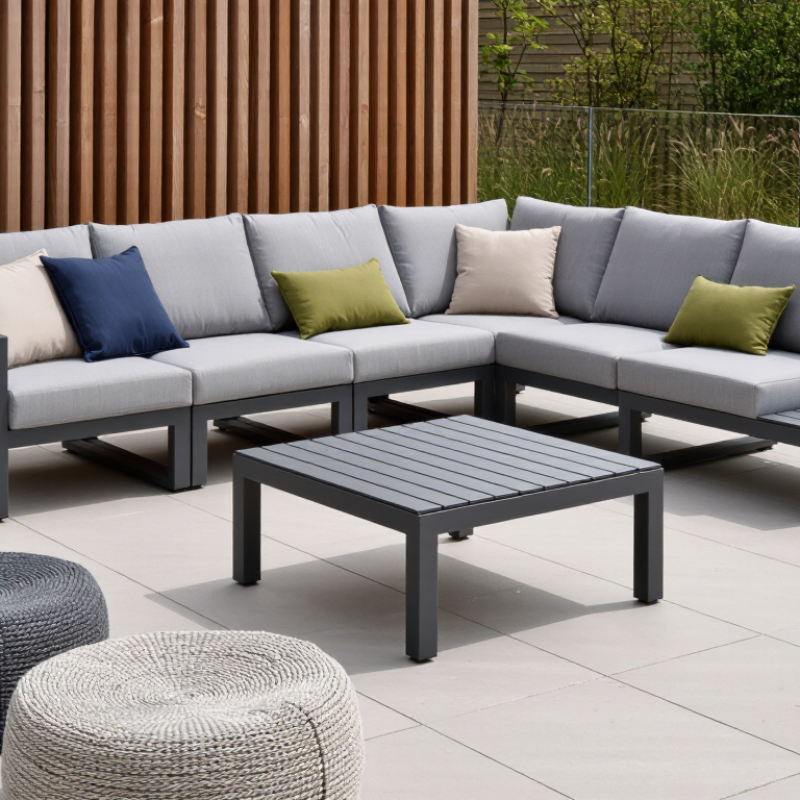
What Are Modular Outdoor Sectionals?
Modular outdoor sectionals are seating systems built from separate pieces rather than one fixed sofa. A typical set may include armless chairs, corner units, ottomans, and a coffee table. Each module connects through clips, brackets, or weighted bases. Owners can arrange them as an L-shape, a long bench, or two facing seats. The layout can change when guests arrive or a balcony is redesigned.
Good outdoor modules need more than attractive cushions. Powder-coated aluminum resists rust, while treated wood requires regular sealing. All-weather wicker should have a stable frame and tight, even weaving. Cushion covers should dry quickly and close securely with durable zippers. Check the seat depth too. Deep seats feel relaxed, but they may overwhelm a narrow terrace. A 60-centimeter walkway can disappear faster than expected.
In supplier evaluations, I inspect connection strength, drainage, stitching, and replacement-part availability. A sectional may look sturdy in showroom lighting yet shift on uneven paving. That detail matters. I once underestimated wind exposure on a rooftop terrace; lightweight pieces moved several centimeters overnight. A heavier base, adjustable feet, or discreet anchoring would have helped. Buyers should also ask for material specifications, load testing, colorfastness data, and care instructions. Outdoor furniture faces ultraviolet light, rain, dust, and temperature changes, not just occasional summer use. Even excellent construction cannot remove maintenance completely. Five minutes of cleaning helps. (Word count approx. 218)
How China’s Top Manufacturers Are Selected
China’s top modular outdoor sectional manufacturers are selected through evidence, not impressive catalogs alone. The review begins with production experience, workshop capacity, and documented quality procedures. Inspectors examine aluminum frames, weld consistency, powder coating, and fastener alignment. A sectional may look elegant, yet weak joints can appear after one rainy season.
Material knowledge also matters. Reliable manufacturers explain foam density, fabric abrasion ratings, drainage design, and corrosion resistance. Samples should face practical tests, including load checks, repeated assembly, sunlight exposure, and water drainage. Production records, inspection reports, and export experience strengthen a manufacturer’s credibility. However, paperwork cannot replace physical verification. That is where many evaluations become incomplete.
Tips: Request a pre-production sample and compare it with the approved specification. Check carton strength, corner protection, and replacement-part procedures. Ask how defects are recorded and corrected. A clear answer is useful evidence. Still, no supplier is flawless, and even experienced factories may miss stitching, color, or dimension details. Independent inspections reduce this risk, but they also add time and cost. The strongest selection process balances price, capacity, consistency, communication, and after-sales support. One overlooked detail can affect an entire outdoor collection.
China Top 10 Modular Outdoor Sectionals Manufacturers? — How China’s Top Manufacturers Are Selected
The chart presents a transparent 100-point evaluation framework for screening leading manufacturers. Product quality, weather resistance, customization, production capability, export compliance, delivery reliability, sustainability, and after-sales support are assessed using documented business and product information rather than brand popularity alone.
China’s Top 10 Modular Outdoor Sectional Manufacturers
China’s Top 10 Modular Outdoor Sectional Manufacturers
China’s top ten modular outdoor sectional manufacturers usually serve different project needs. Some focus on hospitality furniture, while others produce collections for residential terraces. Their strongest products often combine powder-coated aluminum frames, solution-dyed fabric, and quick-drying foam. These materials handle sunlight, rain, and frequent movement better than ordinary indoor upholstery.
A reliable evaluation should examine factory capacity, material traceability, and quality-control records. Ask for frame-wall thickness, welding photos, foam density, and fabric test results. Outdoor sectionals should also show stable connectors and replaceable covers. Those small details affect comfort after months of use. Container loading matters too. Poor stacking can damage corners, legs, and woven surfaces before delivery.
The leading suppliers typically support custom dimensions, neutral colors, and modular layouts. A corner unit, armless chair, and ottoman should connect without awkward gaps. Samples reveal more than polished catalog images. Check drainage after simulated rain. Inspect stitching under tension. Measure seat height personally.
Not every large manufacturer fits every buyer. Some factories offer impressive prototypes but weak after-sales communication. Others provide consistent production but limited design flexibility. This is where careful comparison becomes necessary. Certifications help, but they do not replace factory audits or sample testing. A thoughtful buyer should compare lead times, packaging methods, replacement-part policies, and production consistency before choosing among China’s top ten manufacturers.
Key Product and Customization Comparisons
China Top 10 Modular Outdoor Sectionals Manufacturers: Key Product and Customization Comparisons
China’s modular outdoor sectional sector is expanding with hospitality and residential demand. Grand View Research estimates the global outdoor furniture market reached about USD 19.5 billion in 2023. Its forecast suggests continued growth through 2030. That growth makes factory comparison more important than catalog browsing.
A practical top-ten review should compare aluminum thickness, weld quality, powder-coating performance, and drainage design. Look for 1.2–2.0 mm frames, stainless fasteners, and UV-resistant finishes. Olefin covers usually offer better fading resistance than basic polyester. Quick-dry foam helps after rain, but cushion density still affects comfort. Small details matter.
Customization separates capable manufacturers from simple traders. Confirm CAD support, corner-unit dimensions, fabric color matching, logo-free packaging, and replacement-cover availability. Ask for test reports covering salt spray, UV exposure, and fabric colorfastness. The Business Research Company identifies commercial outdoor furniture as a significant demand segment, especially for hotels and restaurants. Therefore, stackable packaging and repeatable module sizes deserve attention.
MOQ, sample charges, tooling fees, and lead times should be compared in one table. A 6–10 week production window may change with custom finishes. My comparison has one limitation: factory claims are not equal to independent testing. Request physical samples. Check the seams yourself. A polished photo can hide weak drainage, uneven cushions, or difficult assembly.
How to Choose the Right Chinese Manufacturer
Choosing among China’s top 10 modular outdoor sectional manufacturers requires more than comparing catalog photos. Begin with factory capability, not promised prices. Ask whether the manufacturer controls cutting, welding, powder coating, weaving, and final assembly. A factory producing every frame internally usually offers better consistency. Still, verify this claim during a video tour or site visit.
Request a working sample before discussing large orders. Check frame joints, cushion recovery, stitching, drainage holes, and connector strength. Place the sectional on a slightly uneven floor. Weak modules often wobble immediately. Ask for aluminum grade, coating thickness, fabric composition, foam density, and carton dimensions. Independent test reports can support these details, but they do not replace inspection. Sometimes the sample looks excellent, while production units reveal careless stitching.
Reliable manufacturers explain minimum order quantities, lead times, replacement policies, and payment steps in writing. They should provide a clear quality-control plan with inspection points before packing. Confirm packaging through a drop-test video or a trial shipment. Clarify whether materials meet your target market’s safety and chemical requirements. Communication matters too. A responsive sales contact may still hide technical gaps. Involve an engineer or third-party inspector when possible. I have seen buyers focus heavily on price and regret ignoring spare connectors, color consistency, and after-sales response time. A cheaper quotation can become expensive after one damaged container.
FAQS
Review factory experience, workshop capacity, quality procedures, and production records. Catalog images are not enough. Inspect physical samples carefully.
Check aluminum thickness, weld consistency, powder coating, and fastener alignment. A 1.2–2.0 mm frame range may suit many outdoor applications. Weak joints can appear after one rainy season.
Ask about foam density, fabric abrasion ratings, drainage, and corrosion resistance. Solution-dyed fabric and quick-drying foam can improve outdoor performance. Comfort still needs personal testing.
Test assembly, load strength, sunlight exposure, and water drainage. Pull the seams gently. Measure seat height yourself. A perfect sample may not represent mass production.
Confirm CAD support, module dimensions, fabric colors, neutral packaging, and replacement-cover availability. Corner units should connect without awkward gaps. This detail is easy to overlook.
Examine carton strength, corner protection, and container-loading methods. Poor stacking can damage legs, corners, and woven surfaces. Packaging is part of quality.
Compare minimum order quantities, sample charges, tooling fees, production time, and replacement-part policies. Custom finishes may extend production to six or ten weeks. Costs can shift.
They provide useful evidence, but they cannot replace physical verification. Request inspection reports and independent testing where practical. My evaluation may still miss small defects.
Conclusion
This guide explores China’s top 10 Modular Outdoor Sectionals manufacturers and explains what makes their products suitable for modern outdoor living spaces. It begins by defining modular outdoor sectionals, including their flexible seating layouts, weather-resistant materials, replaceable components, and adaptable designs. It then introduces practical criteria for evaluating manufacturers, such as production capabilities, material quality, customization options, design support, quality control, certifications, communication, and delivery reliability.
The comparison section reviews differences in frame construction, cushions, fabrics, configurations, finishes, packaging, and project-based customization without focusing on any specific brand. Finally, the guide offers a clear approach to selecting the right Chinese manufacturer based on order volume, target market, budget, design requirements, outdoor conditions, and after-sales support. Readers can use these insights to compare suppliers more confidently and develop durable, attractive, and functional outdoor seating collections.