Outdoor living should feel comfortable, not like an indoor room moved outside. Luxury Teak Lounge Chairs offer a considered balance: warm wood under the hand, a generous place to recline, and a natural finish that suits gardens, terraces, and poolside spaces. Teak is valued for its dense grain and naturally occurring oils, which help it withstand outdoor exposure. Still, no material is maintenance-free. Sunlight can gradually turn its honey-brown surface silver-grey, and cushions need care after rain.
William Morris, the designer and craftsman, offered a useful principle: “Have nothing in your houses that you do not know to be useful, or believe to be beautiful.” It is not a teak-specific quote, but it speaks to choosing outdoor furniture with both comfort and purpose in mind. Look closely at the chair’s joinery, frame thickness, seat depth, and cushion fabric. These details matter more than a glossy product photograph. That matters outdoors.
A well-made lounge chair can become the quiet centre of a patio: a book on the arm, a cool drink nearby, and room to stretch out. Yet the best choice depends on your space and habits. Teak may weather beautifully, but its changing color is not everyone’s preference. Not quite effortless. Consider the upkeep, test the seating angle if possible, and choose a finish you will still enjoy after several seasons.
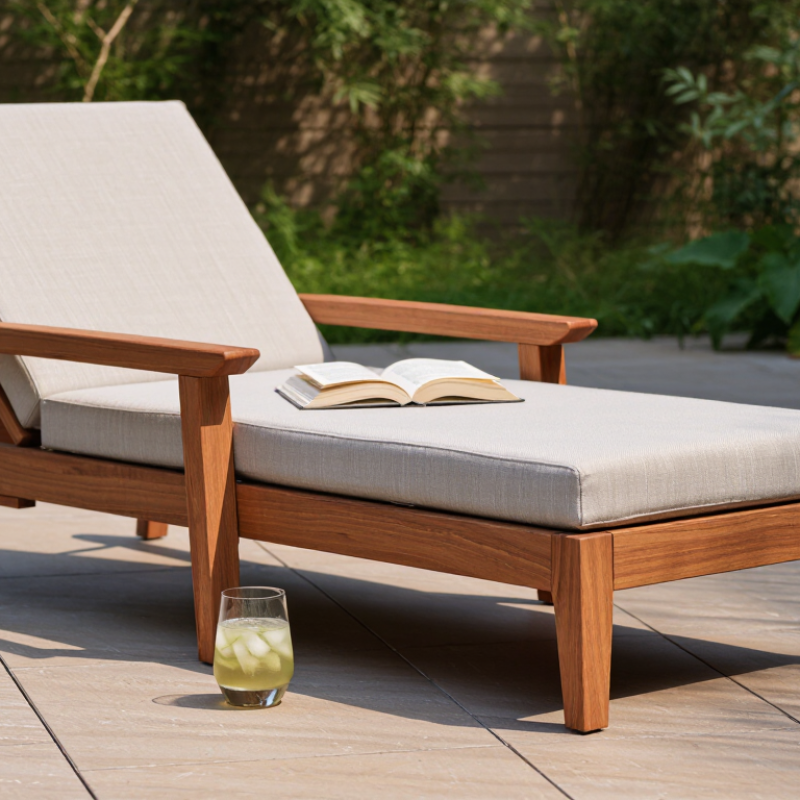
What Defines a Luxury Teak Lounge Chair?
A luxury teak lounge chair is more than a thick frame and a high price. It combines well-selected timber, careful joinery, supportive proportions, and a finish suited to outdoor exposure. Teak’s close grain and naturally occurring oils help it resist moisture, though no wood is maintenance-free. The USDA Forest Products Laboratory’s Wood Handbook reports teak specific gravity near 0.55 at 12% moisture content, a useful indicator of its substantial, solid feel. But density alone does not make a chair luxurious. Feel the difference. Smoothly rounded edges, even gaps between slats, and joints that do not wobble matter when you sit back or shift your weight.
Comfort is just as tangible. A well-designed lounge chair supports the back and thighs, while a gently reclined seat lets the shoulders relax without forcing the neck forward. Check the details: Does rainwater drain between the slats? Are the feet stable on a stone patio? Can cushions be removed to dry? Responsible sourcing belongs in the definition, too. FAO’s 2020 Global Forest Resources Assessment estimates that forests cover about 31% of global land area, making clear why timber origin deserves attention. Ask for documented sourcing and clear care guidance. Still, even fine teak will weather toward silver-grey if left untreated; that change is not a defect, but it may not suit every patio. Details matter.
| Why Choose Luxury Teak Lounge Chairs for Outdoor Living? — What Defines a Luxury Teak Lounge Chair? | ||
|---|---|---|
| Feature | What to Look For | Why It Matters Outdoors |
| Teak material | Solid teak with clear information about the wood’s grade, origin, and responsible sourcing. Teak naturally contains oils that help it resist moisture and weathering. | Well-selected teak is suited to outdoor furniture. When left untreated, its golden-brown color typically weathers to a silver-gray patina; this change is natural and does not by itself indicate damage. |
| Frame construction | Closely fitted joints, smooth edges, consistent finishing, and secure hardware. Corrosion-resistant stainless-steel fasteners are a practical choice for outdoor use. | Careful construction helps the chair remain stable through regular use and changing outdoor conditions. Hardware and joinery quality can matter as much as the wood itself. |
| Reclining comfort | A supportive backrest, comfortable seat depth, and a reclining position that suits the intended use. Adjustable models should have secure, easy-to-operate mechanisms. | Ergonomic proportions make the chair more comfortable for reading, resting, or sunbathing. Try the chair where possible, as preferred angles and dimensions vary by person. |
| Typical dimensions | Many lounge chairs are approximately 70–85 cm wide and 150–200 cm long when fully extended; actual dimensions vary by design and recline position. | Check the product’s exact measurements, including the fully reclined footprint, to ensure it fits the patio, deck, or poolside area. |
| Finish and surface | A carefully sanded surface with an even finish and no rough, splintered, or sharp areas. Ask whether the teak is unfinished, oiled, or sealed. | Different finishes affect appearance and maintenance. Oils and sealers may need periodic renewal; they are generally used to influence color, not as a substitute for basic care. |
| Cushions and fabrics | If cushions are included, look for outdoor-rated fabric, quick-drying or weather-resistant construction, and removable covers when available. | Outdoor fabrics are designed to handle exposure better than ordinary indoor textiles, but performance varies. Store cushions during prolonged wet weather to help keep them in good condition. |
| Weather and care | Follow the maker’s cleaning instructions. Routine care commonly includes brushing off debris and washing with mild soap and water; avoid harsh cleaners unless approved. | Teak can be left to weather naturally or maintained to retain a browner appearance. Covering or storing furniture during harsh conditions can reduce cleaning and wear. |
| Design and detailing | Balanced proportions, consistent grain, refined edges, and details that complement the surrounding outdoor space. | Thoughtful design makes the chair feel cohesive with a patio or garden while keeping comfort and practical use at the center. |
| Long-term value | Evaluate material quality, construction, repairability, care requirements, and the availability of replacement components or cushions. | A higher initial price is most meaningful when supported by durable materials, comfortable design, and realistic maintenance expectations. |
| Note: Dimensions, finishes, construction methods, and care requirements vary by chair. Review the specific product specifications before purchase. | ||
FAQS
Its natural extractives help resist decay and insect damage. Modest shrinkage can help the wood stay stable as moisture changes. Construction still matters.
No. Sunlight often turns exposed teak silver-gray over time. This is normal weathering, though grime and loose joints need attention.
Brush away grit, then use mild soap, water, and a soft brush along the grain. Rinse well and let the wood dry fully. Easy enough.
It can, but avoid standing water beneath the chair. Slats and open space help drainage and airflow. Let cushions dry indoors after showers.
Test a suitable teak treatment on a hidden area first. Finishes need periodic care and may wear unevenly in strong sunlight. Results can disappoint.
Try the recline, check that your feet rest naturally, and notice pressure behind your knees. Broad armrests and smooth edges help during longer sits. A quick test can miss things.
Check them a few times each year, especially after windy weather. Tighten loose hardware carefully and replace damaged parts before the frame shifts. I sometimes forget.
Keep the chair off persistently wet ground, allow airflow underneath, and remove dirt gently. Teak is durable, not maintenance-free. That’s the catch.
Conclusion
Luxury Teak Lounge Chairs combine carefully crafted construction, refined design, and the natural character of teak to create a comfortable, inviting place to relax outdoors. Teak’s dense grain and naturally occurring oils help it withstand changing weather, moisture, and everyday outdoor use. Its warm appearance also complements a wide range of garden, patio, and poolside settings, while thoughtfully shaped seats and supportive proportions make extended lounging more enjoyable.
With simple, consistent care, teak furniture can remain useful and attractive for many years. Owners can clean it periodically and choose whether to preserve its original golden tone or allow it to develop a softer, weathered finish. Responsibly sourced teak can also be a considered choice for outdoor living, offering lasting utility that may reduce the need for frequent replacement. Overall, these lounge chairs bring together comfort, durability, and enduring style in a practical investment for outdoor spaces.