Choosing Weatherproof Garden Seating is not just a question of picking a style that looks good in a catalogue. The right choice should suit your climate, available space, and the way you use your garden. A bench beside a sunny wall has different needs from dining chairs left on an exposed patio. Rain, strong sunlight, frost, and damp ground can all affect furniture over time.
Materials deserve a close look. Powder-coated aluminium is generally lightweight and resists rust, while dense hardwood may need periodic care to retain its finish. Synthetic weave can be practical, but its quality and frame construction vary. Check product specifications, care instructions, and warranty terms rather than relying on labels such as “all-weather.” No outdoor material is completely maintenance-free. Looks can mislead.
Comfort matters, too. Sit down if possible, and check seat depth, back support, and arm height. Measure the area before buying; allow room to pull out chairs and walk around a table. Think about cushions as well. Quick-drying foam and removable covers can help, but storing them during prolonged wet spells is still sensible. Small details matter.
This guide explores how to compare materials, construction, comfort, and upkeep, then match them to your outdoor space and local conditions. It also considers practical trade-offs, since a durable set may cost more upfront, while a cheaper option could need earlier replacement. Even careful choices involve some uncertainty: exposure varies from garden to garden. A realistic assessment can help you choose seating that stays useful, comfortable, and attractive through changing seasons.
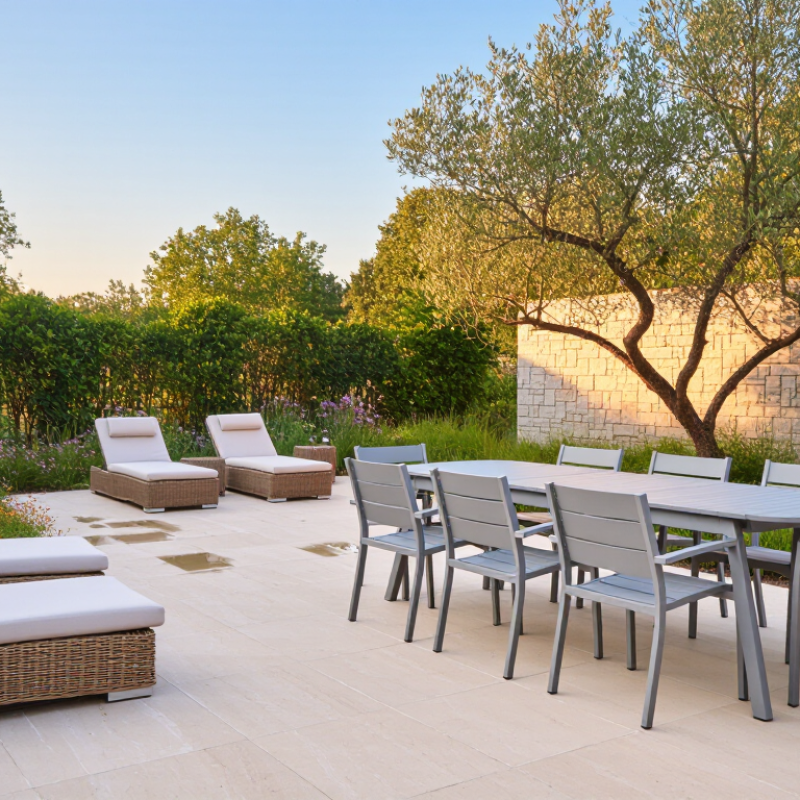
Weatherproof garden seating is built to handle rain, sun, and changing temperatures better than ordinary indoor furniture. It does not mean the seat can stay outside untouched in every storm. Weather-resistant materials, protective finishes, and water-draining designs help reduce damage, but they cannot prevent all wear. That distinction matters.
A metal frame may resist rust when its coating remains intact, while untreated wood can absorb moisture and need regular care. Woven synthetic materials often dry quickly, but dirt can collect in tight gaps. Check joints, feet, and undersides too. These areas may stay damp after the top looks dry. Cushions need separate consideration: removable covers and quick-drying fillings are useful, but prolonged rain can still leave them wet. Nothing is entirely maintenance-free.
Think about your garden’s actual conditions. A sheltered patio differs from an exposed spot where wind pushes rain sideways. Look for stable feet on uneven paving and slats or gaps that let water escape. I’ve found that small details are easy to overlook when a seat looks sturdy in a showroom. A simple cover or winter storage may extend its useful life, though it adds a little effort. That trade-off is real.
Before choosing weatherproof garden seating, map the conditions where it will actually sit. NOAA’s 1991–2020 U.S. Climate Normals report monthly temperature and precipitation patterns for local weather stations. Check these alongside your own observations: note where rain pools, where afternoon sun lands, and which corner catches gusts. A sheltered porch and an exposed lawn can need very different materials, even within one garden.
Watch the details. Does wind drive rain beneath a roof? Do cushions stay damp after morning shade? These clues matter because repeated wetting and slow drying can encourage mildew and stress finishes. The World Health Organization’s Global Solar UV Index guide notes that fresh snow can reflect up to 80% of UV radiation. That matters in snowy gardens: sunlight reaches seating from above and below. Small oversight.
A practical assessment takes a few days, not a glance. Photograph the seating area in morning, midday, and late afternoon, then check it after rain. Record exposure before buying. I might misjudge a spot on a clear day; clouds and seasonal changes can make it behave differently. If the site is windy, test a lightweight chair before committing to a full set. Keep local winter conditions in view, too: freeze-thaw cycles, snow loading, and long damp spells may call for different care than summer heat alone.
Track direct sunlight across a typical clear day: under 3 hours is shade, 3–6 hours is partial sun, and 6 or more hours is full sun. These are practical guide ranges; definitions can vary, and daylight changes with season and location. Use the result to gauge UV and heat exposure, then also check prevailing wind and rain splash when choosing weather-resistant seating.
Weatherproof garden seating is not made from one perfect material; climate and upkeep matter just as much. Teak tolerates rain well and can develop a silver-gray surface if left untreated. It still benefits from occasional cleaning, and its color may change unevenly. Powder-coated aluminum is lightweight and resists rust, but chips in the coating deserve attention. In damp or coastal settings, inspect joints and fasteners, not just the visible frame.
Compare how each option handles sun, moisture, and everyday wear. Synthetic resin seating is easy to wipe clean, but lower-quality material can become brittle or fade after prolonged UV exposure. Look for UV-resistant construction and tightly woven edges. Steel feels sturdy and stays put in wind, yet scratched coatings can expose it to rust. Natural wood feels warm under hand, though maintenance varies by species. Cushion fabric should dry quickly; water-resistant does not mean waterproof. Small details matter.
Tips: Check the care instructions before buying. Look beneath seats for drainage holes, and feel the frame for sharp edges. If possible, leave a sample outdoors for a few days. I might still underestimate winter exposure; a cover or indoor storage can change the result.
| Material | Rain & Moisture | Rust & Corrosion | Sun & UV Exposure | Typical Maintenance | Weight & Stability | Relative Cost | Best Suited To | Points to Consider |
|---|---|---|---|---|---|---|---|---|
| Teak | Naturally tolerates outdoor moisture; allow it to dry between prolonged wet periods. | Does not rust. | Weathers in sunlight; its color commonly changes to silver-gray if left untreated. | Clean periodically. Suitable outdoor oil or sealer is optional and requires reapplication. | Moderately heavy; generally stable. | High | A natural wood look and long-term outdoor use. | Usually more expensive than common softwoods; check that timber is responsibly sourced. |
| HDPE lumber | Does not absorb water like untreated wood and is well suited to wet outdoor conditions. | Does not rust; hardware may still need corrosion-resistant finishes. | UV resistance depends on the formulation and color; outdoor-grade material is preferable. | Usually occasional washing with mild soap and water. | Often heavy and stable; construction varies. | Medium to high | Low-maintenance seating exposed to rain and damp conditions. | Can feel warm in direct sun; quality, UV protection, and recycled content vary. |
| Powder-coated aluminum | Performs well outdoors when the coating and joints are intact. | Aluminum does not rust like iron or steel, but damaged finishes and fittings can corrode. | The finish helps protect the surface; prolonged sun may affect some coatings over time. | Wash with mild soap; inspect the coating and touch up chips as directed. | Lightweight and easy to move; may need securing in strong winds. | Medium | Easy-to-rearrange seating and damp climates. | Check welds, fasteners, and coating quality; lightweight frames can shift in gusts. |
| Stainless steel | Generally suitable outdoors; rinse off salt and other deposits where relevant. | Corrosion resistance depends on the grade and exposure. Grade 316 is commonly chosen for coastal settings; no grade is completely maintenance-free. | Sun exposure typically does not damage the metal itself. | Clean periodically; rinse salt and avoid cleaners that can damage the finish. | Heavy and stable. | High | Modern designs and locations where a sturdy metal frame is preferred. | Confirm the steel grade, especially near the coast; metal can become hot or cold to the touch. |
| Synthetic resin wicker | Resin strands generally tolerate rain, but water can collect in cushions or the frame. | Depends on the hidden frame; aluminum or well-protected steel are common options. | UV performance varies; outdoor-rated resin is less likely to become brittle or fade quickly. | Brush away debris and wash with mild soap; dry or store cushions during wet weather. | Usually light to moderate, depending on the frame. | Medium | A woven appearance with a softer, lounge-style feel. | Inspect the frame and UV rating; cushions are often less weather-resistant than the weave. |
| Galvanized or coated steel | Suitable for outdoor use when the protective coating remains intact. | Galvanizing or paint slows rust, but scratches, exposed edges, and damaged joints can rust over time. | The coating protects the metal; inspect for fading, chips, or peeling. | Clean and dry as needed; repair coating damage promptly using suitable products. | Heavy and stable. | Low to medium | A sturdy seating frame at a comparatively accessible price. | Needs closer inspection in humid or coastal environments; surface damage can expose the steel. |
Comparison notes: Relative costs are broad market categories, not fixed prices. Actual durability depends on material grade, construction, finish, climate, and care. Check product specifications for outdoor and UV suitability, and protect or store cushions separately when possible.
Durability starts with the frame, joints, and hardware—not just the finish. Check the underside. Look for tight connections, smooth welds, and screws that resist corrosion. Aluminum is light and does not rust, but thin sections may flex. Dense hardwood can handle outdoor use when maintained, though it may weather unevenly. Woven seating should have closely spaced strands and a stable frame. “Weatherproof” does not mean indestructible; standing water and strong sun still take a toll.
Comfort needs a real test. Sit for several minutes, not just a quick showroom perch. Your feet should rest naturally, and the seat edge should not press into the backs of your thighs. Notice whether the back supports you without forcing an upright pose. Cushions can soften a firm seat, but check that covers come off and dry easily. Small details matter. Armrests should feel steady, not merely look substantial.
Maintenance is part of the purchase, and it is easy to underestimate. Ask what routine care each material needs, then picture doing it after a rainy week. Wipe away grit before it scratches surfaces, and let cushions dry fully before storing them. Check care instructions for suitable cleaners; harsh products can damage protective finishes. I would also leave room for imperfect weather: even well-made seating benefits from shelter during long wet spells.
Choosing garden seating starts with measuring the space, not browsing styles. Note the usable floor area, door swing, and room needed to walk past chairs. On a narrow balcony, two folding chairs may be more practical than a deep sofa. Measure twice. For a patio, sketch the seating footprint with tape before buying; it can reveal awkward gaps that a photo misses. Leave enough room to pull chairs back without blocking a path.
Set your budget around the full setup, not just the frame. Weather-resistant seating still needs care, and cushions, covers, replacement feet, or rust-resistant fasteners can add cost. A lower-priced chair may suit a sheltered porch, while exposed spots often call for sturdier materials and easy-to-clean surfaces. Check care instructions and joinery, especially where water could collect. Keep it simple. If cushions will need to be carried indoors after every shower, consider whether you will actually do that. I would not assume the most expensive option lasts longest; fit, drainage, and routine maintenance matter too. Choose pieces you can move, store, and maintain comfortably within your space and budget.
It can handle rain, sun, and changing temperatures better than indoor furniture. It is not storm-proof. Some wear is still likely.
Check the joints, feet, and underside, where moisture can linger. Look for intact coatings and gaps that let water drain. Small details matter.
Not always. Removable covers and quick-drying fillings help, but cushions can remain wet after prolonged rain. Bring them inside when needed.
Measure the usable floor area, door swing, and walking space. Folding chairs may fit better than a deep sofa. Measure twice.
Mark the chair or sofa footprint with tape on the patio. This can reveal blocked paths or awkward gaps that photos miss.
Sturdier materials and easy-to-clean surfaces may suit exposed areas. Price alone does not guarantee a longer life. I would check drainage and joinery too.
Account for cushions, covers, replacement feet, and suitable fasteners. Care also takes time. That part is easy to forget.
No. Dirt can collect between woven strands, and wood may need regular care. A cover or winter storage can help, but adds effort.
Choosing the right Weatherproof Garden Seating starts with understanding what “weatherproof” means: furniture should withstand the conditions it will actually face, rather than simply look suitable for outdoor use. Consider your garden’s climate and exposure, including direct sun, rainfall, wind, humidity, and seasonal temperature changes. A sheltered patio may need different protection from an open lawn or a coastal area.
Compare materials for resistance to moisture, fading, rust, and temperature changes, while also assessing sturdiness, comfort, and upkeep. Some options may need occasional cleaning or protective treatment, while others are easier to maintain. Finally, measure your available space and think about how many people will use the seating, how it will fit with the garden, and what you can spend. Balancing these factors helps you choose seating that is practical, comfortable, and well suited to your outdoor space.