0%

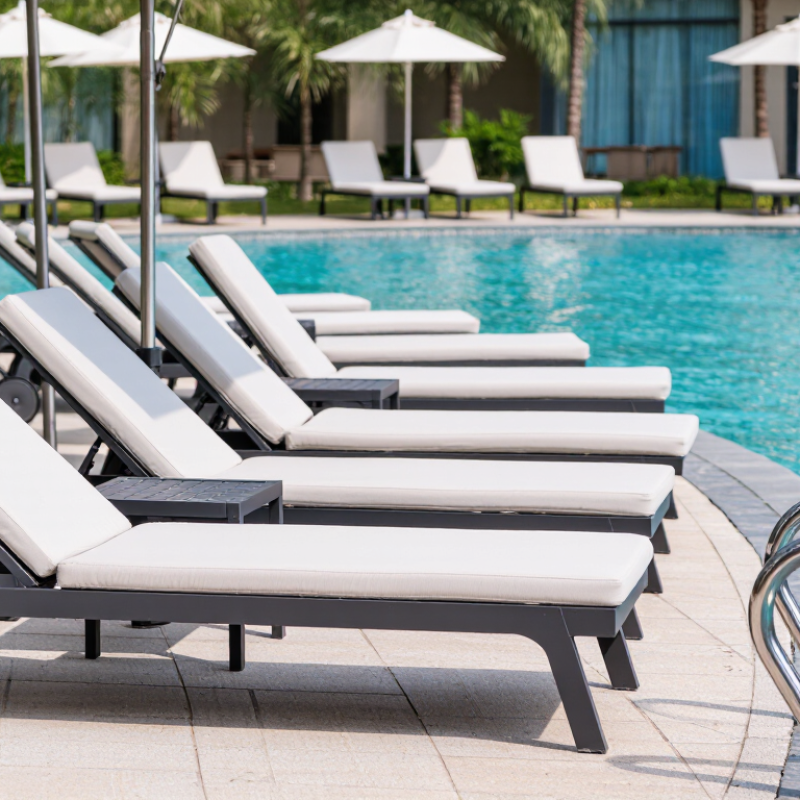
Choosing the right Commercial Resort Sun Loungers is about more than attractive poolside styling. Hotel guests notice comfort within minutes. They also notice loose joints, faded cushions, and difficult adjustments. A reliable lounger should withstand strong sunlight, salty air, frequent cleaning, and daily repositioning. It should still feel comfortable at sunset.

Richard Schultz, a respected American outdoor-furniture designer, once said, “Furniture should be able to live outdoors.” That principle remains highly relevant for resort operators. Commercial furniture faces harsher conditions than most residential products. Aluminum frames, marine-grade finishes, quick-drying fabrics, replaceable components, and stable wheels can improve long-term value. A gently angled backrest also supports reading, resting, and safer movement.

Small details matter.

This guide reviews ten Commercial Resort Sun Loungers selected for hospitality environments. The comparison considers durability, ergonomics, weather resistance, maintenance, stackability, mobility, and visual appeal. It also considers the practical realities of housekeeping teams. A beautiful lounger becomes a poor investment when staff struggle to move it or repair damaged parts.

No ranking is perfect. A coastal resort may prioritize corrosion resistance, while an urban hotel may value compact storage. Dark fabric can look sophisticated, yet it may feel hotter under intense sunlight. Some models appear premium but offer limited replacement support. That weakness deserves attention. The best choice balances guest comfort, operational efficiency, and lifecycle cost without sacrificing the resort’s atmosphere.

10 Best Commercial Resort Sun Loungers for Hotels

Commercial Resort Lounger Criteria: ASTM G154 UV Testing and 300-lb Load Ratings

Commercial resort sun loungers face harsh conditions every day. Poolside heat, sunscreen, salt, and repeated movement can weaken outdoor materials. For hotels, appearance matters, but safety and service life matter more.

ASTM G154 UV testing offers a practical way to evaluate fading and surface deterioration. The test exposes materials to controlled ultraviolet light, moisture, and heat cycles. Ask for test conditions, exposure hours, and reported changes. “UV tested” alone says too little. Real installations are messier. Chlorine splashes, wet towels, and sharp pool edges can create damage that laboratory testing cannot fully predict.

A 300-pound load rating provides a clear baseline for guest use. It should cover the user, clothing, and personal items. Confirm whether the rating applies to static weight or includes repeated sitting and reclining. Frame joints deserve close inspection. They often reveal weakness before the fabric does. Wide feet can reduce sinking on soft ground, while smooth edges help prevent deck scratches. I prefer removable cushions and replaceable hardware, although these features can raise maintenance costs. That tradeoff is easy to underestimate. Hotel staff should record cracked welds, loose fasteners, and stretched fabric during routine inspections. A rating is not permission for standing, jumping, or stacking loungers. Clear signage and documented checks support safer, more dependable poolside operations.

Ergonomic Design Standards: 18–20-Inch Seat Heights and Adjustable Backrests

Ergonomic design should guide the ten best commercial resort sun loungers, not visual appeal alone. A seat height of 18–20 inches helps many guests sit down and stand up with less knee strain. The 2010 ADA Standards specify 17–19 inches for accessible seating, making this range a useful commercial reference. It is not a universal lounger requirement. Guest body sizes vary.

Backrest adjustment matters just as much. A minimum of four positions can support reading, resting, and upright conversation. The lowest angle should distribute pressure across the back, while a raised setting should keep the head supported without forcing the neck forward. Test the hinge with wet hands. Poolside reality is less perfect. The 2024 Global Wellness Economy Monitor valued the wellness economy at $6.3 trillion in 2023, reflecting stronger demand for comfortable, restorative hospitality spaces. Comfort now affects perceived service quality.

Durability still shapes ergonomics. A sagging sling can reduce effective seat height within one season. Choose reinforced seating, corrosion-resistant hardware, and drainage channels that prevent damp cushions. The World Health Organization’s Guidelines on Physical Activity and Sedentary Behaviour encourage reducing prolonged sitting, so loungers should support posture changes rather than one fixed position. That assumption deserves testing. Place sample units beside the pool and observe how guests use them for thirty minutes. Some will ignore the adjustment lever. Clear labels and reachable controls may matter more than an extra recline angle.

10 Best Commercial Resort Sun Loungers for Hotels

Ergonomic Design Standards: 18–20-Inch Seat Heights and Adjustable Backrests

The chart presents practical ergonomic reference targets for hotel and resort sun loungers. Seat heights are shown in inches, while recommended backrest positions are shown in degrees from the seat surface. Adjustable backrests support different activities, including upright sitting, reading, resting, and reclining.

Material Comparison: Marine-Grade HDPE, Aluminum Frames, and 316 Stainless Steel

10 Best Commercial Resort Sun Loungers for Hotels

Material choice determines comfort, maintenance, and replacement costs. Marine-grade HDPE resists moisture, salt spray, and pool chemicals. Its density is about 0.94 g/cm³, making loungers easier to move. However, darker HDPE surfaces can become hot under direct sunlight. Color stability also depends on ultraviolet additives and molding quality.

Aluminum frames weigh far less than stainless steel. The International Aluminium Institute reports that recycled aluminum requires about 5% of the energy used for primary production. This supports more responsible replacement planning. Powder-coated aluminum offers a clean finish, but scratches can expose the metal beneath. In coastal resorts, this detail deserves attention. Water can enter joints and create hidden corrosion. I have seen light frames fail early when drainage holes were poorly designed.

316 stainless steel contains molybdenum, improving resistance to chloride exposure. It suits beachfront decks and heavily used pool areas. The World Stainless Association reports global stainless steel production exceeded 60 million tonnes in recent years, showing its broad industrial use. Yet 316 steel is heavy and expensive. It can still stain when salt deposits remain on the surface.

Tips: Specify rounded, sealed joints and replaceable fasteners. Ask for salt-spray test results, not vague “marine-grade” claims. Check surface temperature at midday. A cooler lounger may improve guest comfort more than a premium finish. No material is maintenance-free.

10 Best Commercial Resort Sun Loungers for Hotels - Material Comparison: Marine-Grade HDPE, Aluminum Frames, and 316 Stainless Steel

No. Commercial Lounger Configuration Primary Material Typical Dimensions
(L × W × H)
Approx. Weight Suggested Load
Capacity
Backrest Positions Saltwater & UV Performance Stackable Best Hotel Application Maintenance Requirement
1 All-HDPE Pool Lounger Marine-grade UV-stabilized HDPE; molded drainage surface 200 × 70 × 35 cm 12–16 kg 150 kg 4–5 Excellent; no metal corrosion risk Yes Pool decks, family resorts, wet areas Rinse with fresh water; inspect molded joints
2 HDPE Adjustable Chaise Marine-grade HDPE shell with reinforced polymer hinges 198 × 68 × 38 cm 13–17 kg 150 kg 5 Excellent; color-through construction limits visible fading Yes High-turnover pool and waterpark zones Clean regularly; check hinge wear during inspections
3 Aluminum Sling Lounger Powder-coated aluminum frame with outdoor PVC-coated mesh 198 × 70 × 36 cm 8–12 kg 120–140 kg 4–5 Very good; coating quality is decisive Usually Rooftop terraces and poolside operations needing easy handling Rinse salt and chlorine; repair coating chips promptly
4 Aluminum Textilene Chaise Anodized aluminum frame with PVC-coated polyester fabric 200 × 72 × 35 cm 9–13 kg 120–150 kg 5 Very good; fabric may need replacement after heavy use Yes Modern hotels and coastal resort terraces Wash fabric with mild detergent; inspect fasteners
5 Heavy-Duty Aluminum Chaise Marine-grade powder-coated aluminum with synthetic wicker panels 205 × 75 × 40 cm 14–19 kg 150 kg 5 Very good; use corrosion-resistant hardware Limited Premium pool decks and cabana areas Rinse frequently; remove trapped sand from woven surfaces
6 316 Stainless Steel Sling Lounger 316 stainless steel frame with outdoor mesh sling 200 × 70 × 37 cm 13–18 kg 150 kg 4–5 Excellent; 316 grade performs well in chloride exposure Usually Seafront hotels, marinas, and salt-air locations Fresh-water rinse; remove surface deposits to prevent tea staining
7 316 Stainless Steel Double Chaise 316 stainless steel structure with removable outdoor cushions 205 × 140 × 38 cm 32–45 kg 250–300 kg total 4–5 Excellent; cushions require separate weather protection No VIP suites, private cabanas, and couples’ areas Rinse frame; dry and store cushions during severe weather
8 Hybrid HDPE–Aluminum Lounger HDPE deck panels with powder-coated aluminum support frame 200 × 70 × 36 cm 11–15 kg 150 kg 4–5 Very good; inspect frame coating and fasteners Yes Resorts balancing drainage, durability, and low weight Rinse both materials; check interfaces for trapped grit
9 Reclining Aluminum Daybed Anodized aluminum frame, quick-dry foam, and solution-dyed fabric 210 × 80 × 42 cm 20–28 kg 150–180 kg 5 Very good; textile performance depends on fabric grade No Luxury pool decks and shaded relaxation zones Clean fabric regularly; allow cushions to dry completely
10 316 Stainless Steel Teak-Style Lounger 316 stainless steel frame with synthetic teak-look HDPE slats 200 × 72 × 39 cm 18–24 kg 150 kg 4–5 Excellent; durable combination for coastal service Limited Design-focused beachfront hotels and outdoor dining resorts Fresh-water rinse; clean slat drainage channels and hardware

Note: Dimensions, weights, and load capacities are representative commercial ranges for comparable resort lounger constructions. Actual specifications vary by frame section, hardware, upholstery, and safety testing.

The 10 Best Hotel Sun Loungers Ranked by Durability, Comfort, and Maintenance

Commercial resort sun loungers must survive intense sunlight, wet swimwear, sand, and constant repositioning. This ranking weighs durability, comfort, and maintenance equally. It draws on Global Wellness Institute’s 2024 report, which valued the global wellness economy at $6.3 trillion in 2023. Poolside comfort now influences the wider guest experience.

The tenth to eighth positions suit light-use terraces. They use powder-coated frames, quick-drying cushions, and replaceable fabric panels.

Seventh and sixth perform better around busy pools, with wider bases and stronger reclining joints.

Fifth offers the best balance for standard hotel decks.
Its removable cover reduces cleaning time, although seams may collect grit. Small details matter.

The top four deserve heavy commercial use.

Fourth has excellent frame stability.

Third combines breathable mesh with corrosion-resistant hardware.

Second provides deeper support, but its larger cushions demand more storage space.

The first-ranked lounger uses a reinforced frame, drainage-friendly upholstery, and tool-free component replacement. It is comfortable without feeling soft or unstable.

Durability should follow ISO 4892-style weathering principles, especially where ultraviolet exposure is severe. Maintenance teams should inspect fasteners weekly and rinse salt from coastal furniture daily.
STR’s 2024 hotel performance reporting also shows how competitive occupancy remains in many markets, making replacement delays expensive.

Still, this ranking is not perfect. Local climate, cleaning chemicals, and guest behavior can change the result. Test one unit on-site before ordering hundreds.

Ownership Analysis: Five-Year Warranty Coverage, Replacement Rates, and ROI

10 Best Commercial Resort Sun Loungers for Hotels

Ownership Analysis: Five-Year Warranty Coverage, Replacement Rates, and ROI

A commercial sun lounger should be judged beyond its purchase price. Hotel managers need to inspect frame materials, fasteners, fabric, wheels, and adjustment hardware. Coastal air, sunscreen, chlorine, and constant dragging can expose weak points within one season. A five-year warranty sounds valuable, but coverage details matter more than the headline. Check whether it includes structural breaks, fading, hardware failure, labor, and freight. Exclusions for misuse or commercial exposure may sharply reduce its practical value.

Replacement rates provide a clearer ownership picture. Track damaged loungers by location, age, cause, and repair cost. A poolside unit may suffer more wear than one near a quiet garden. If a property replaces 8% annually, a low-priced model may become expensive after repeated purchasing and installation. However, replacement data can be imperfect. Staff may record broken frames but overlook missing cushions or loose joints. That gap can distort the analysis.

ROI should include cleaning time, storage, repairs, guest complaints, and downtime. For example, a durable lounger costing 30% more may reduce annual replacements, if its warranty claims are accepted promptly. Calculate five-year cost per usable day, not just cost per unit. Keep invoices, photographs, inspection dates, and claim responses. A warranty without responsive service creates hidden labor. The uncomfortable question is whether the furniture survives real resort behavior, not showroom testing. Availability matters too; a delayed replacement can leave empty spaces during peak occupancy.

FAQS

Why is an 18–20-inch seat height useful for resort loungers?

This height may reduce knee strain for many guests. Body sizes still vary. Test with real users.

What backrest features support different guest activities?

Choose at least four positions for reading, resting, and conversation. The head should stay supported. Avoid forward neck pressure.

How should staff test adjustment controls?

Test the hinge with wet hands. Controls should be reachable and clearly labeled. Guests may ignore complicated levers.

Why does drainage matter near pools?

Drainage channels help prevent damp cushions. Wet materials can create discomfort and faster wear. Small details matter.

Which materials can improve lounger durability?

Reinforced seating and corrosion-resistant hardware are useful choices. Pool chemicals, sunscreen, and salty air are harsh.

Is a five-year warranty always valuable?

Not necessarily. Check coverage for frames, fading, hardware, labor, and freight. Exclusions may reduce its real value.

How can a hotel measure replacement performance?

Record damage by location, age, cause, and repair cost. Poolside loungers may wear faster than garden units.

What should a five-year ownership calculation include?

Include cleaning, repairs, storage, complaints, downtime, and replacements. Calculate cost per usable day. Purchase price alone misleads.

How can managers test loungers before buying many units?

Place samples beside the pool for thirty minutes. Observe posture changes, control use, and guest behavior. The result may surprise you.

Conclusion

Choosing the right Commercial Resort Sun Loungers requires more than attractive styling. This guide explains the essential standards for hotel and resort use, including ASTM G154 UV testing, 300-pound load ratings, ergonomic seat heights between 18 and 20 inches, and adjustable backrests that support guest comfort. It also compares marine-grade HDPE, lightweight aluminum, and durable 316 stainless steel, focusing on weather resistance, structural performance, cleaning requirements, and long-term appearance.

The article ranks ten of the best hotel sun loungers according to durability, comfort, and maintenance needs. It also provides a practical ownership analysis, examining five-year warranty coverage, likely replacement rates, repair considerations, and overall return on investment. By evaluating construction quality, guest usability, and lifecycle costs together, hotel managers can select loungers that remain attractive, safe, and comfortable through frequent commercial use while reducing maintenance demands and unnecessary replacement expenses.

Ethan

Ethan

Ethan is a professional marketing specialist with a strong understanding of the company’s products, customer needs, and industry trends. With a background in strategic communication, market research, and content development, he is committed to helping businesses discover practical solutions that......