Modern Outdoor Sofa Systems are becoming practical anchors for global outdoor living spaces, not decorative afterthoughts. Grand View Research reports that the global outdoor furniture market is expanding steadily through 2030, supported by residential renovation, hospitality development, and stronger demand for weather-resistant products. Its market analysis highlights modularity, durability, and low-maintenance materials as important purchasing factors. Those priorities shape this 2026 guide.
Market growth alone does not guarantee a good sofa system. Buyers must inspect frame alloys, drainage gaps, cushion density, UV stability, and replacement-part availability. A beautiful sectional can fail when water stays beneath its seat. Richard Frinier, a widely recognized outdoor furniture designer, described this lifestyle shift as “the outdoor room is the new great room.” His observation still feels accurate, especially in compact urban terraces and resort environments.
This overview compares leading Modern Outdoor Sofa Systems for international buyers, including modular layouts, aluminum construction, performance textiles, and logistics considerations. Euromonitor and Statista both identify outdoor living as a continuing home-improvement and lifestyle trend, although market estimates differ by definition and region. That uncertainty deserves attention. Not every supplier publishes comparable testing data, and climate performance can vary sharply between Dubai, London, and Singapore. Therefore, the strongest options are judged beyond appearance. We consider documented materials, warranty clarity, ergonomic comfort, packaging efficiency, and supplier experience. Some rankings may remain debatable. That is intentional. Global purchasing needs evidence, but it also requires careful judgment around local weather, installation skills, and long-term maintenance.
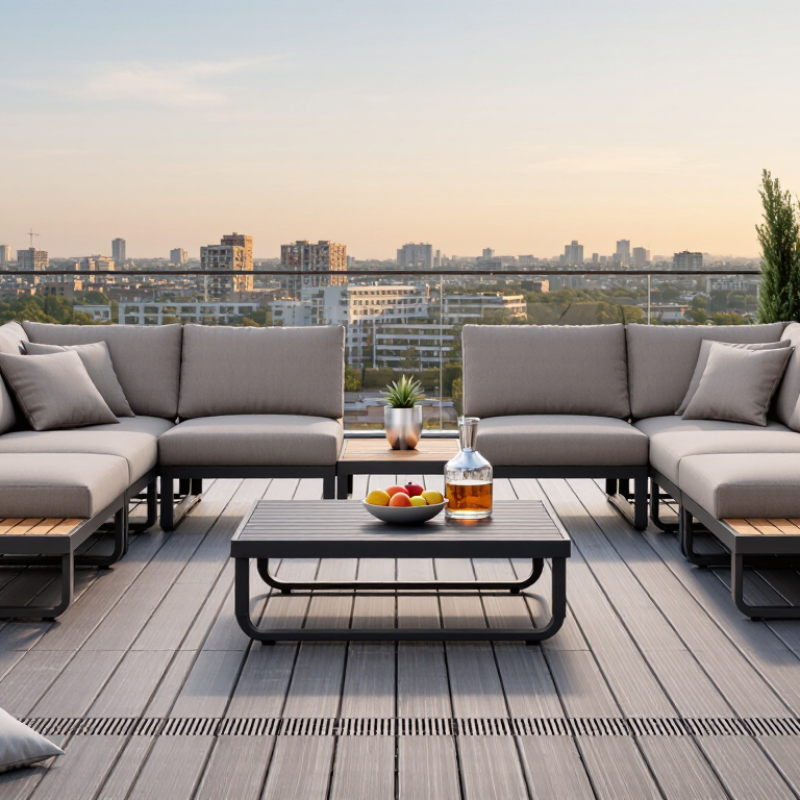
A modern outdoor sofa system is a coordinated seating collection designed for open-air living. It usually combines modular sofas, corner units, ottomans, tables, and movable backrests. Buyers can rearrange these pieces for balconies, terraces, hotels, or large gardens. Flexibility is the defining feature. Not decoration alone.
Grand View Research reports that the global outdoor furniture market is projected to grow at about 5.6% annually from 2024 to 2030. This growth reflects stronger demand for comfortable outdoor rooms. A professional system should use corrosion-resistant frames, quick-drying cushions, UV-stable fabrics, and drainage gaps. These details matter after heavy rain. They also reduce replacement costs.
Ergonomics remains essential for daily use. Seat depth, back angle, cushion density, and table height must work together. The Freedonia Group identifies durability, weather resistance, and design flexibility as important purchase factors in outdoor furniture. However, no material performs perfectly in every climate. Powder-coated metal may need edge inspections near salty air. Light fabrics can still stain. Recycled materials may also vary in texture and strength. Global buyers should request test results, care instructions, warranty terms, and replacement-part availability. A system that looks impressive in a showroom may feel less practical after one wet season.
2026 Top Modern Outdoor Sofa Systems for Global Buyers
In 2026, outdoor sofa design is moving toward flexible systems, not fixed seating groups. Global buyers increasingly want modules that fit balconies, terraces, hotels, and private gardens. Rounded corners, deeper seats, and mixed heights create a relaxed hospitality feel. However, oversized forms can waste space in compact urban projects. Designers should measure circulation paths before selecting generous proportions.
Material choices are becoming more climate-aware. Powder-coated aluminum, recycled polymer frames, quick-dry cushions, and solution-dyed fabrics support longer outdoor use. Ventilated bases help rainwater escape after sudden storms. Neutral sand, clay, olive, and charcoal tones are gaining attention, while removable accent covers add seasonal color. My project experience suggests that easy replacement often matters more than perfect appearance. Some buyers still underestimate maintenance, and that can weaken an otherwise strong investment.
Tips: Request fabric performance data, drainage details, spare-cover availability, and tested weight limits. Compare full lifecycle costs, not only the initial quotation. Leave space for cleaning access. A beautiful sofa becomes inconvenient when every cushion must be moved separately. Also, confirm local weather conditions before choosing materials. Salt air, intense sunlight, freezing temperatures, and heavy humidity demand different specifications.
Urban population share by region highlights the demand context for space-efficient, modular outdoor sofa systems.
Higher urbanization supports design priorities such as compact footprints, modular configurations, multifunctional seating, and flexible balcony or terrace use. Data: World Bank, Urban Population (% of Total Population), latest broadly comparable regional figures for 2023.
Modern outdoor sofa systems must balance comfort, structure, and climate resistance. Powder-coated aluminum offers low weight and strong corrosion protection when the coating is applied evenly. Stainless-steel fasteners reduce rust risks, especially near coastlines. Teak and other dense hardwoods can perform well, but they still need controlled moisture and regular inspection. Materials are only part of the answer.
Construction details often decide service life. Look for welded or reinforced joints, adjustable feet, and removable covers with reliable stitching. Quick-dry foam allows water to drain through open-cell structure, reducing damp odors after rain. Slatted bases improve airflow beneath cushions. A sealed frame may look cleaner, yet trapped moisture can create hidden damage. That is an easy detail to miss.
Tips: Match the sofa to its actual climate, not its showroom image. Check UV exposure, rainfall, salt air, frost, and wind before ordering. Ask for coating tests, fabric specifications, drainage details, and replacement-part support. Test cushion recovery after repeated compression. Confirm packaging strength for international shipping. Details matter. A heavier frame is not automatically better. In practice, small gaps, weak seams, or poor drainage often cause earlier failure. Buyers should compare construction samples, not only photographs, and allow room for imperfect installation or uneven outdoor surfaces.
Global outdoor sofa buying is moving toward flexible systems, not fixed seating blocks. Grand View Research projects the global outdoor furniture market to grow at about 5.6% annually from 2024 to 2030. For 2026 buyers, modularity offers practical value in apartments, hotels, terraces, and large gardens. A two-seat module can support a narrow balcony. Add corner units for a deeper lounge arrangement. Changeable layouts matter.
Measure the space before selecting the sofa system. Leave at least 60 centimeters for comfortable circulation around active seating areas. In compact spaces, armless modules reduce visual weight and improve movement. For courtyards, U-shaped configurations can create a social center without permanent construction. Large resorts may need repeated linear units for easier maintenance and replacement. Small details matter here.
The Global Wellness Institute reported that the wellness economy reached 5.6 trillion dollars in 2022, highlighting demand for outdoor relaxation areas. Weather-resistant frames, quick-drying cushions, and replaceable covers support long-term use. Buyers should request testing information for UV exposure, moisture, load capacity, and corrosion resistance. Standards vary across markets, so documentation needs careful review. No configuration is perfect. Overly deep seats can waste balcony space, while lightweight frames may shift in strong wind. We have seen attractive layouts fail because delivery routes were ignored. A sofa should fit the room, the climate, and the service plan.
| Modular System | Recommended Space | Typical Configuration | Approx. Overall Size | Seating Capacity | Frame and Surface Materials | Cushion Construction | Weather Suitability | Maintenance Level | Indicative Retail Range | Best Use Case |
|---|---|---|---|---|---|---|---|---|---|---|
| Compact Balcony Set | Small balconies, apartment terraces, compact urban patios | Two armless modules with a small corner or side table | 180–220 cm wide × 75–85 cm deep | 2–3 people | Powder-coated aluminum frame; high-pressure laminate or ceramic-look tabletop | Quick-dry foam with solution-dyed polyester covers | Light to moderate exposure | Low | US$500–1,200 | Morning coffee, reading, and space-efficient seating |
| Linear Lounge Set | Long balconies, narrow patios, poolside edges | Three-seat sofa with one ottoman or coffee table | 220–280 cm wide × 80–95 cm deep | 3–4 people | Aluminum or stainless-steel frame; UV-stable rope, teak, or compact laminate details | Reticulated quick-dry foam with removable outdoor fabric | Moderate to high exposure | Low to medium | US$900–2,100 | Relaxed seating without blocking circulation routes |
| L-Shaped Corner System | Medium patios, garden corners, rooftop terraces | Two- or three-piece L-shaped arrangement with corner module | 240–300 cm wide × 180–240 cm deep | 4–6 people | Powder-coated aluminum or galvanized steel; synthetic wicker, rope, or timber accents | High-resilience foam with water-resistant, removable covers | All-season with protection | Medium | US$1,300–3,200 | Family lounging, entertaining, and corner optimization |
| U-Shaped Conversation System | Large terraces, resort decks, spacious gardens | Three sofa sections surrounding a central table | 300–420 cm wide × 260–340 cm deep | 6–9 people | Aluminum frame; weather-resistant rope or outdoor-grade woven panels | Quick-dry foam, breathable liners, and solution-dyed acrylic or polyester fabric | High exposure with covers | Medium | US$2,200–5,500 | Large-group conversations and outdoor dining extensions |
| Freestanding Modular Set | Multi-purpose patios, hospitality terraces, flexible gardens | Individual armless chairs, corner units, ottomans, and tables | Variable; typically 200–360 cm wide × 80–220 cm deep | 3–8 people | Lightweight aluminum frame with powder coating; optional teak or compact laminate surfaces | High-density outdoor foam with zippered washable covers | Moderate to high exposure | Low to medium | US$1,200–4,000 | Frequent reconfiguration and seasonal layout changes |
| Deep-Seating Daybed System | Pool decks, sun terraces, private villas, wellness areas | Wide lounge base with backrest modules, bolster cushions, and side table | 200–300 cm wide × 100–150 cm deep | 2–4 people | Marine-grade aluminum or treated hardwood base; non-corrosive hardware | Thick quick-dry foam with breathable mesh underside | High sun and splash exposure | Medium to high | US$1,500–4,500 | Sunbathing, napping, and premium poolside relaxation |
| Dining-Height Modular Sofa | Outdoor kitchens, covered dining patios, hospitality venues | Bench-style modules combined with dining-height table | 220–360 cm wide × 75–90 cm deep | 4–8 people | Powder-coated aluminum or stainless steel; ceramic, compact laminate, or treated wood tabletop | Firm quick-dry seat cushions with lower-profile back cushions | Moderate to high exposure | Low to medium | US$1,400–3,800 | Outdoor meals, work sessions, and extended entertaining |
| Rooftop Wind-Ready System | High-rise rooftops, exposed decks, coastal terraces | Low-profile sectional modules with weighted base and compact table | 240–380 cm wide × 180–260 cm deep | 4–7 people | Marine-grade aluminum or stainless steel; corrosion-resistant fasteners and weighted feet | Quick-dry foam with tightly fitted UV-resistant covers | High wind and UV exposure | Medium to high | US$2,000–5,000 | Wind-exposed areas requiring stable, low-profile furniture |
| Covered Veranda System | Covered porches, verandas, shaded courtyards | Two- or three-seat sofa, lounge chair, and movable ottoman | 230–340 cm wide × 85–105 cm deep | 4–6 people | Powder-coated aluminum, teak, or synthetic woven frame components | High-resilience foam with water-repellent outdoor upholstery | Protected outdoor use | Low | US$1,000–2,800 | Comfortable daily use with reduced direct weather exposure |
| Hospitality-Grade Terrace System | Hotels, restaurants, clubs, and commercial outdoor areas | Repeatable two-seat and three-seat modules with linking tables | Flexible; commonly 180–360 cm wide per cluster | 4–10 people per cluster | Commercial-grade aluminum or stainless steel; replaceable woven or rope panels | Contract-grade quick-dry foam with UV- and stain-resistant fabric | Frequent high exposure | Medium | US$2,500–7,500 | High-traffic areas requiring repairable modular components |
For global buyers, a modern outdoor sofa system must balance comfort, durability, compliance, and logistics. Start with the destination climate. Coastal projects need strong corrosion resistance, while hot regions demand stable frames and fade-resistant fabrics. Ask suppliers for material specifications, test reports, and production samples.
Relevant references may include EN 581 for outdoor seating, ISO 9227 for salt spray testing, and ISO 4892-3 for artificial weathering. These standards support evaluation, but they do not replace local requirements. Confirm fire, chemical, labeling, and packaging rules with qualified experts in each market. Check frame welds, drainage gaps, cushion recovery, and fastener quality. A factory audit can reveal details that photographs hide. Batch records and inspection reports also improve traceability.
Tips: Test one complete sample outdoors. Measure water drainage after rain. Request replacement-part plans. Compare warranty terms carefully. No checklist is perfect. A sample can mislead when mass production uses different foam, fabric, or coating. Require approval samples before shipment, and inspect random units against agreed tolerances. Supplier communication matters too; slow answers may signal weak after-sales support. Leave room for honest review, because even a well-tested sofa system may perform differently under dust, intense sunlight, or repeated commercial use.
It is a coordinated seating collection with modular sofas, corner units, ottomans, tables, and movable backrests. Flexibility matters most.
Corrosion-resistant frames, quick-drying cushions, UV-stable fabrics, and drainage gaps support longer outdoor use. No material works perfectly everywhere.
Measure the area, doorways, and delivery route first. Leave about 60 centimeters around active seating paths for easier movement.
Yes. Two-seat or armless modules can reduce visual weight and fit narrow spaces. Deep seats may still waste valuable room.
U-shaped arrangements create a social center. Repeated linear modules support easier maintenance, replacement, and guest movement.
Salt air can damage exposed edges. Strong sunlight fades fabrics, while freezing temperatures and humidity require different specifications.
Ask for UV, moisture, load, and corrosion test results. Also request care instructions, warranty terms, spare covers, and replacement-part details.
Compare the full lifecycle cost, not only the initial quotation. Replacement covers and simple cleaning may save money later.
Buyers sometimes choose an impressive showroom layout without checking circulation or delivery access. It can fail after installation.
Very important. Quick-dry cushions and ventilated bases help rainwater escape after sudden storms. Still, cushions need regular cleaning.
Modern Outdoor Sofa Systems are flexible, durable seating solutions designed to support comfortable and stylish outdoor living in residential, hospitality, and commercial spaces. This overview explains their defining features, including modular design, adaptable layouts, ergonomic comfort, and coordinated components. It also examines the 2026 trends shaping global markets, such as clean architectural forms, natural color palettes, multifunctional seating, sustainable material choices, and designs that connect indoor and outdoor environments.
The article further explores materials, construction methods, drainage, UV protection, corrosion resistance, and other factors that influence long-term weather performance. It compares modular configurations suitable for balconies, terraces, gardens, rooftops, pool areas, and large public settings. For global buyers, the discussion highlights practical purchasing criteria, including product quality, safety expectations, packaging, logistics, customization capability, documentation, production consistency, and supplier reliability. Together, these insights help buyers evaluate outdoor sofa systems according to climate, space, intended use, maintenance needs, and long-term value.